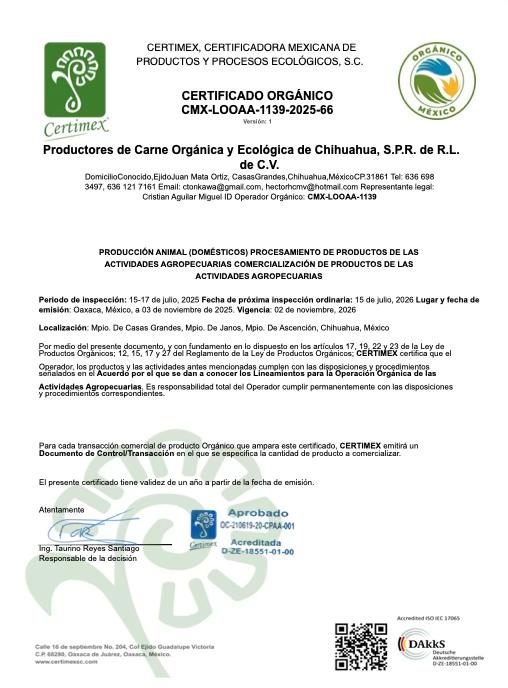
Organic livestock certification (CERTIMEX): Audited organic management. Inspections and compliance. Traceability and documentary support.
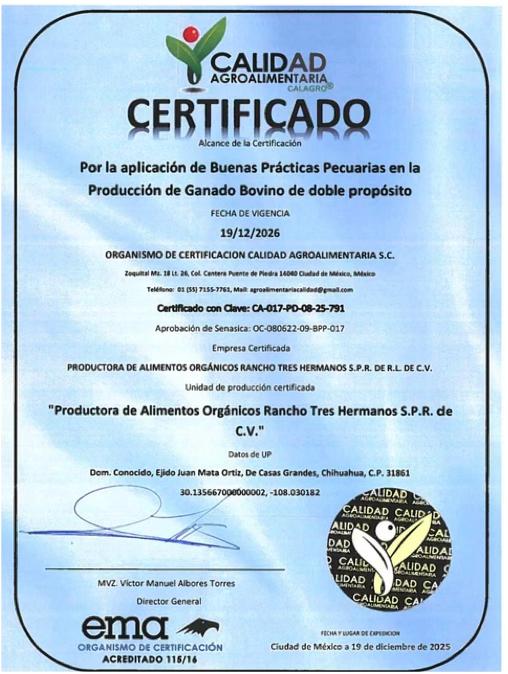
Certificate of Good Practices (Federal Government) Official recognition of good practices. Operational protocols and controls. Enhanced traceability.
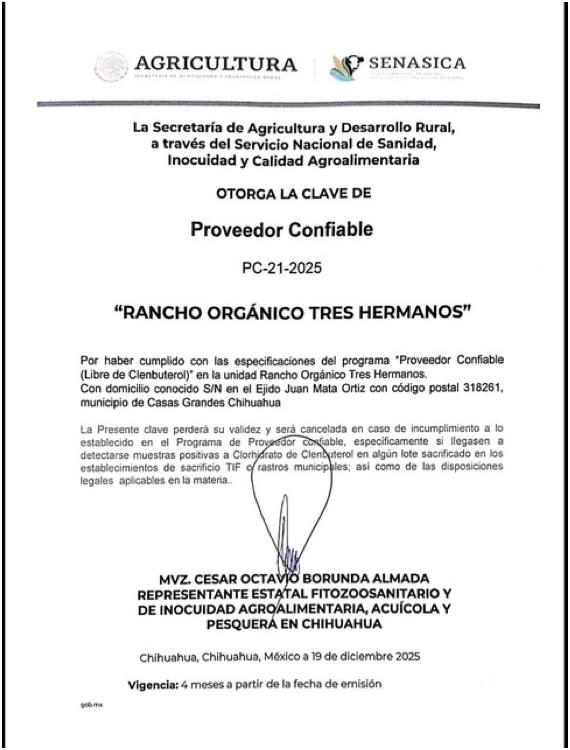
Reliable Supplier (Clenbuterol-Free) Clenbuterol-free status. Analytical evidence. Safety and trust.
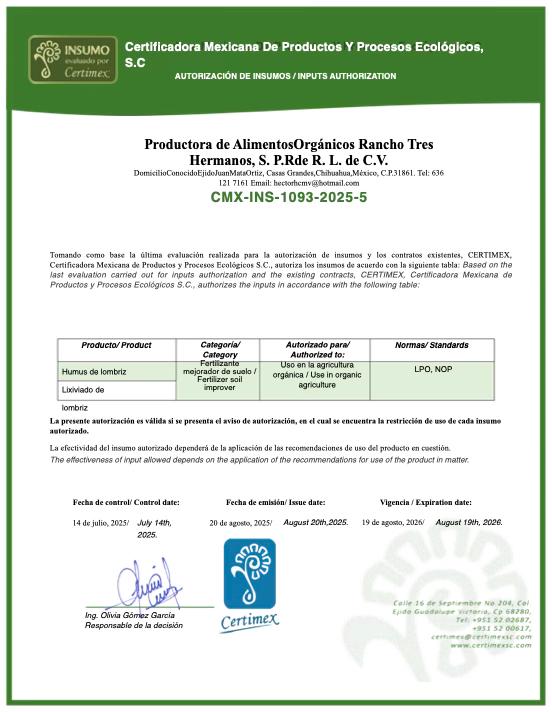
Organic fertilizer certificate (CERTIMEX) Worm humus + worm tea Authorized input for organic agriculture. Certification under NOP standard. Inspections and validity.
Measurable climate impact
At R3H, regenerative impact is not promised: it is measured and verified through independent monitoring by Pronatura Noreste.
Results 2024 → 2025 (grassland indicators):
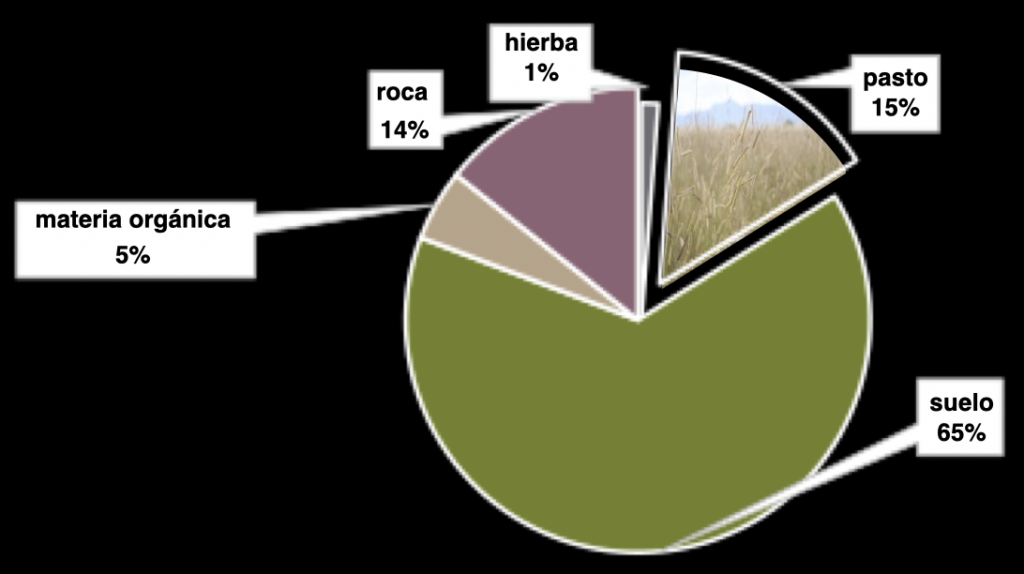
• Bare soil: 65% → 59%
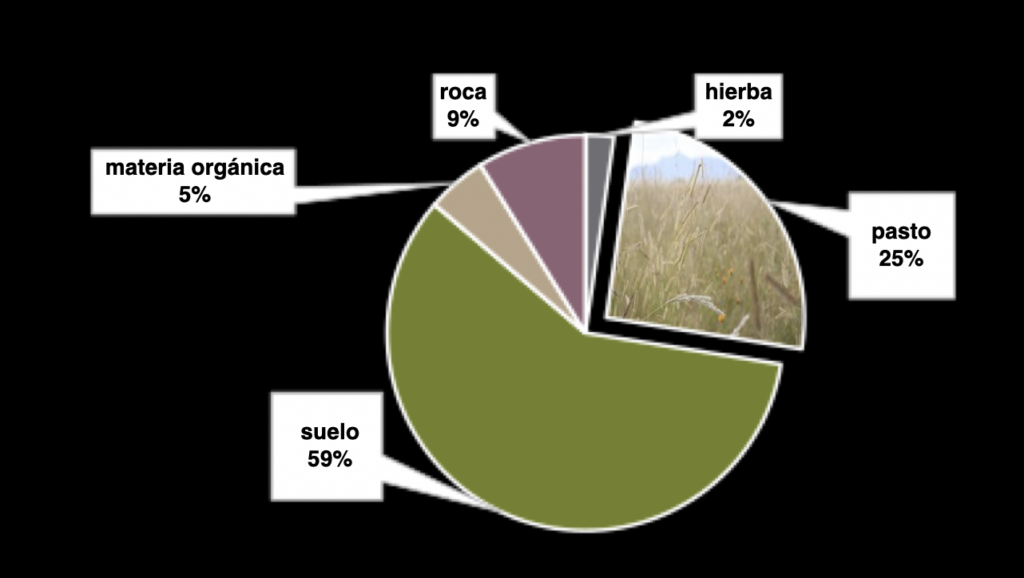
• Grass cover: 15% → 25%
• Recorded biodiversity: 25 bird species (including 3 priority species)
This validates the restoration of the ecosystem and paves the way for scaling up the model with evidence.
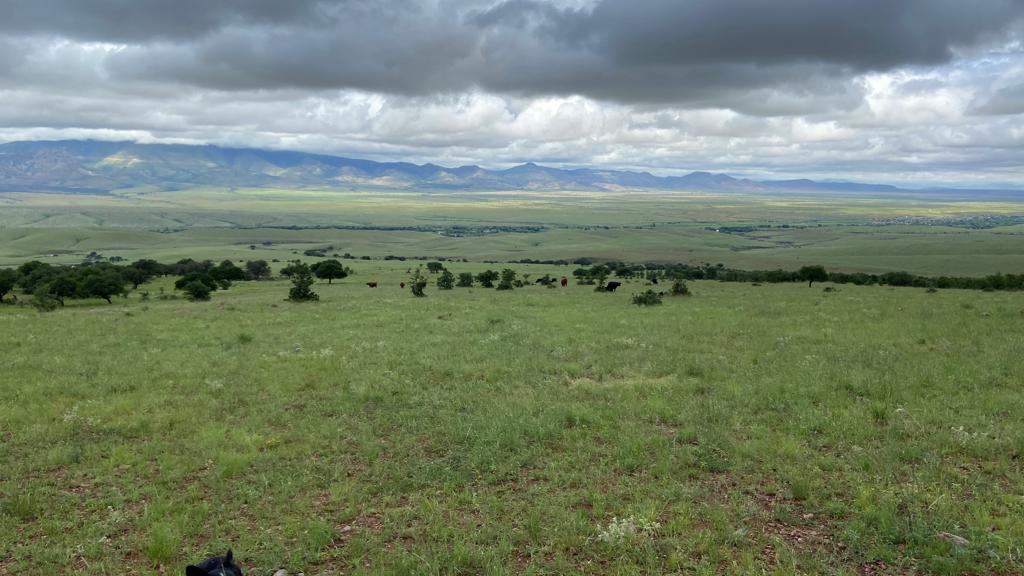
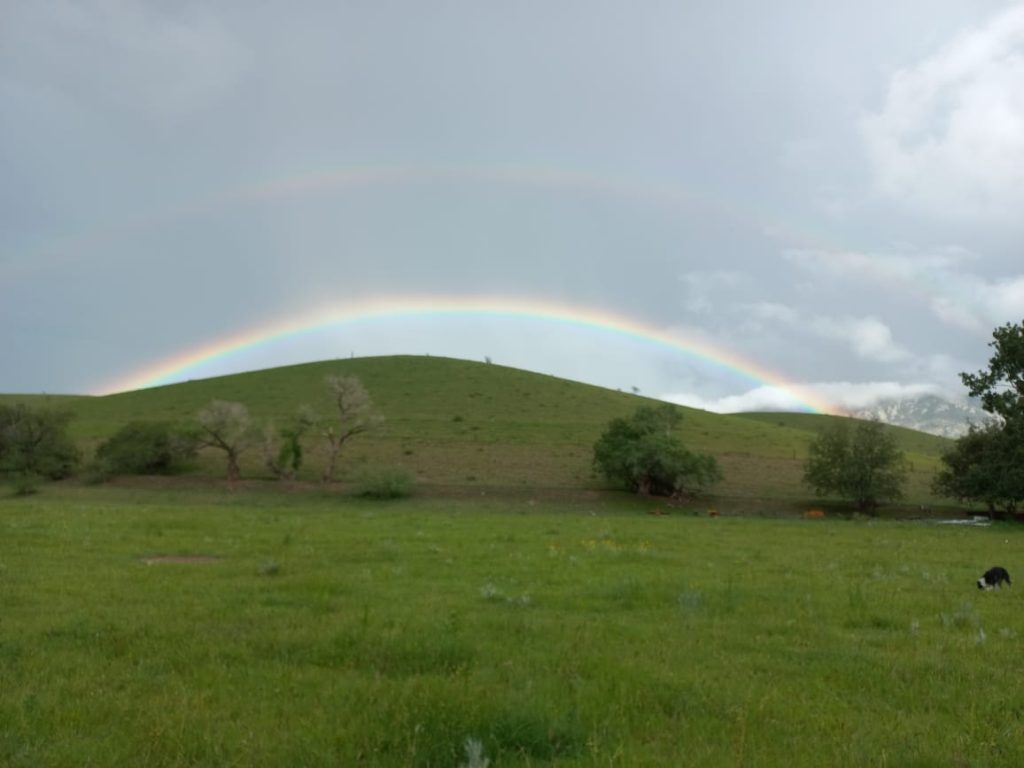
At R3H, climate impact is demonstrated through climate measurement, independent ecosystem monitoring, technical validation, and natural signs of recovery such as the return of grassland birds. It is backed by organic certifications for livestock and fertilizer, as well as recognition from the Federal Government for Good Practices.
Coverage percentages for the year 2024
According to the 2025 samples, 25% of the coverage corresponds to grasses, 2% to other herbaceous plants, 5% to organic matter, 9% to rock, and 59% to bare soil.
Coverage percentages for the year 2025
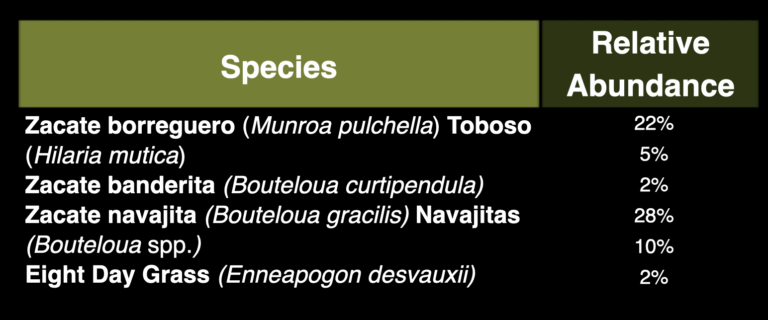
In 2024, the grass with the highest relative abundance was blue grass (Bouteloua gracilis), followed by sheepgrass (Munroa pulchella) and several species of blue grass (Bouteloua). Below is
a table showing the species that accounted for more than 2% of relative abundance.
Measurable and monitorable impact.
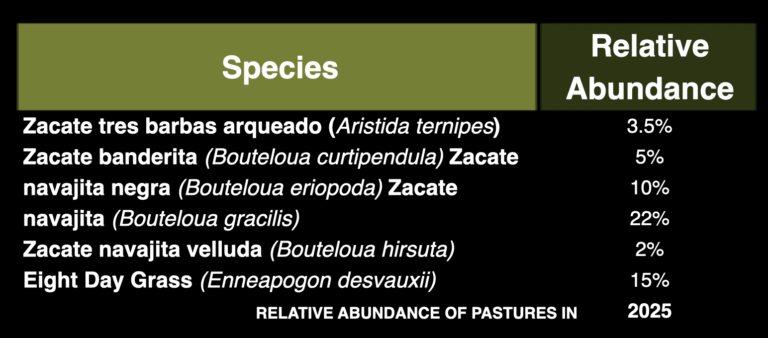
In 2025, the grass with the highest relative abundance was slender bluegrass (Bouteloua gracilis), followed by eight-day grass (Enneapogon desvauxii) and black slender bluegrass (Bouteloua eriopoda). Below is a table showing the species that represented more than 2% of relative abundance in 2025.